Smarter Roads, Part 3: How Small Defects Become Big Problems
In Part 2, we explored the scale of Australia’s road network, one of the largest and most expensive public assets we maintain. But understanding the size of the system is only half the story.
This chapter looks at the physics of road failure. It explains how defects form, why they escalate, and how weather accelerates the process. If we want to detect problems earlier, we need to understand how they grow.
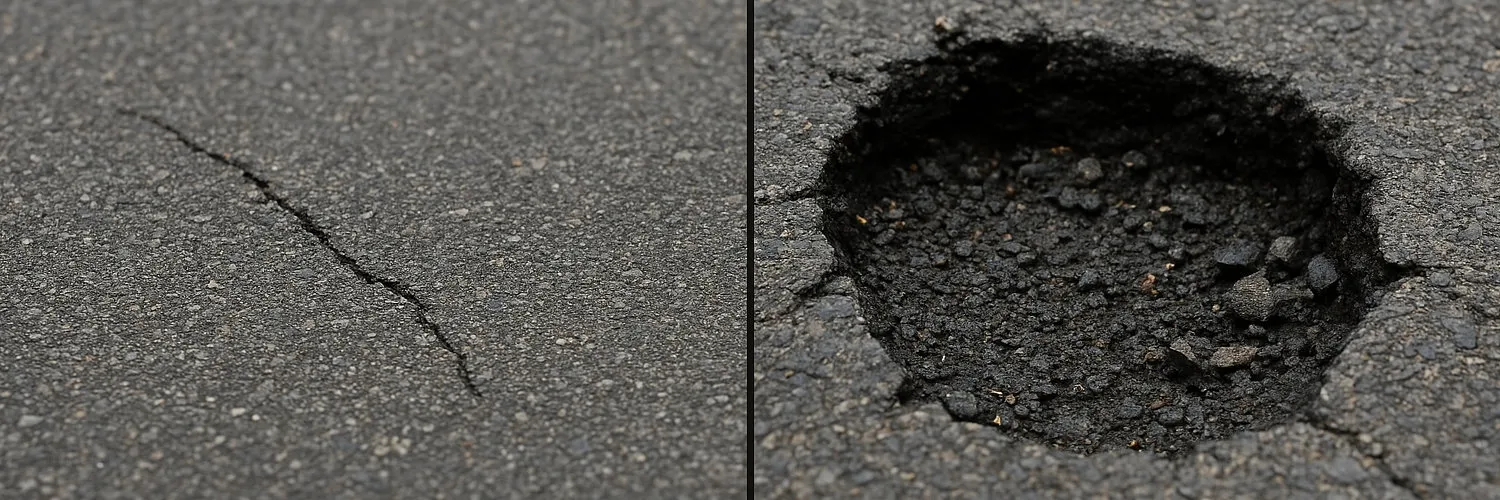
Most Road Defects Start Small
Potholes do not appear overnight. They begin as microcracks in the surface layer, often too small to notice. These cracks form due to:
- repeated axle loads from vehicles
- thermal expansion and contraction
- material fatigue over time
A 2023 study in Transportation Research Record found that pothole formation is strongly correlated with early stage cracking and surface wear, particularly in areas with poor drainage or unstable subgrade conditions [1].
Water Is the Real Enemy
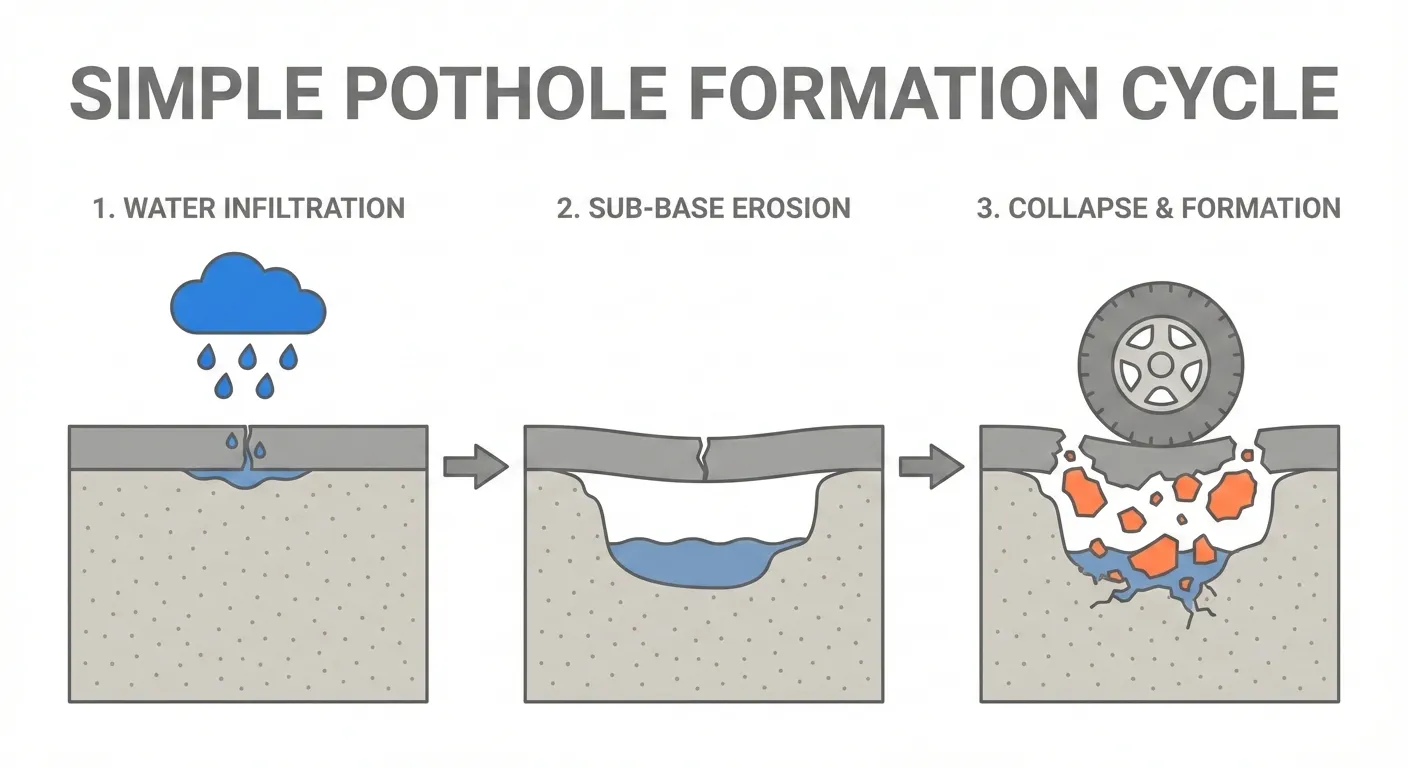
Once cracks form, water ingress becomes the accelerant. Moisture seeps into the pavement layers and weakens the base and sub base. When vehicles pass over, the trapped water creates pressure that displaces material and enlarges the voids.
In colder climates, freeze thaw cycles make this worse. In Australia, intense rainfall and flooding play a similar role by saturating the pavement structure and accelerating failure.
Once moisture enters the pavement, deterioration speeds up dramatically.
Weather Is Making It Worse
A 2024 parliamentary inquiry identified extreme weather events as one of the leading causes of road degradation in Australia [2]. The report highlights:
- increased rainfall and flooding in Queensland and New South Wales
- more frequent heatwaves that soften bitumen and increase rutting
- gaps in asset condition data that make deterioration harder to track
Austroads’ 2023 update to its Road Deterioration Models confirms that cracking, rutting, and roughness are all accelerating, especially in regions with high rainfall and heavy vehicle traffic [3].
The Cost of Delay
The longer a defect goes undetected, the more expensive it becomes to repair.
| Defect Stage | Typical Cost (AUD) | Risk Level |
|---|---|---|
| Microcrack | < $10 (sealant) | Low |
| Surface depression | $100 to $500 | Moderate |
| Pothole | $500 to $2,000 | High |
| Structural failure | $10,000+ | Critical |
typical industry cost ranges based on council maintenance schedules, Austroads guidance, and contractor benchmarks.
Early intervention is not only cheaper. It is safer. Even small defects can cause serious harm for cyclists, scooter riders, and pedestrians.
Why This Matters for the Project
This chapter reframes the challenge.
We’re not just trying to “find potholes.”
We’re trying to catch the moment when a defect becomes dangerous, and that moment often comes well before the first complaint.
But we believe we can go further.
With enough data, we should be able to predict that moment and intervene before a defect becomes a danger at all.
We should also be able to identify the contributing factors that lead to early failure: poor drainage, subgrade instability, material fatigue, or weather exposure.
That means smarter maintenance.
Fewer failures.
Lower costs.
And safer roads for everyone.
In the next post, we’ll look at why early detection is so difficult today — and the data gap at the heart of the system.
References
- Analysis and Prediction of Pothole Formation Rate Using Spatial Density Measurements and Pavement Condition Indicators - Transportation Research Record, 2023
- Inquiry into the implications of severe weather events on the national regional, rural, and remote road network - Parliament of Australia, 2023
- Webinar: Road Deterioration Model Update - Austroads, 2023